Buy escrouen.eu ?
We are moving the project
escrouen.eu .
Are you interested in purchasing the domain
escrouen.eu ?
domain@kv-gmbh.de · 0541-91531010
Buy escrouen.eu ?
What does inhomogeneous and homogeneous mean?
Inhomogeneous refers to something that is not uniform or consistent throughout, such as a mixture with uneven distribution of its components. For example, a soil with varying levels of nutrients can be considered inhomogeneous. On the other hand, homogeneous refers to something that is uniform or consistent throughout, such as a solution with evenly distributed components. For instance, a well-mixed sugar-water solution can be considered homogeneous. **
Is it a homogeneous or an inhomogeneous field?
The question is not specific enough to determine whether the field is homogeneous or inhomogeneous. In physics, a homogeneous field is one that has the same value at every point in space, while an inhomogeneous field varies in value from point to point. Without more information about the specific field in question, it is not possible to determine whether it is homogeneous or inhomogeneous. **

Similar search terms for Inhomogeneous
Top-Angebote
Products related to Inhomogeneous:
-
Jla Home/Furniture & Decor Faye Ginkgo Leaves Wall Art Gold , GoldThe Faye Ginkgo Wall Art decorates with a delicate look of luxury. Made of metal, this wall sculpture, by Martha Stewart, features six ginkgo leaves with a gold foil finish. Measures 43 Wx2 Dx24 H. Metal wall art by Martha Stewart Features elegant...76,99 $*Shipping: 0,00 $Secure redirect to the provider
-
Lush Living Finds Popeye The Sailor Man Brass Home Decor, Desk Art Ornament For Office, Tea Table & Car Desktop Accessories Popeye The Sailor Man Brass Home Decor, Desk Art Ornament For Office, Tea Table & Car Desktop AccessoriesAdd Character to Your Space Bring the iconic Popeye The Sailor Man Figure Brass Home Decor to your home or office. This detailed ornament makes an excellent centerpiece for your tea table or office desk. Crafted from highquality brass, it adds a...29,97 $*Shipping: 0,00 $Secure redirect to the provider




-
How do you solve an inhomogeneous differential equation?
To solve an inhomogeneous differential equation, one typically uses the method of undetermined coefficients or variation of parameters. In the method of undetermined coefficients, one assumes a particular form for the solution and then solves for the unknown coefficients. In the variation of parameters method, one assumes a particular form for the solution and then solves for the unknown parameters by substituting the solution back into the original differential equation. Both methods involve finding a particular solution to the inhomogeneous equation and then adding it to the general solution of the corresponding homogeneous equation. **
-
What are homogeneous and inhomogeneous media in physics?
Homogeneous media in physics are materials that have uniform properties throughout, such as density, refractive index, or conductivity. This means that any physical quantity measured at any point within the material will be the same. In contrast, inhomogeneous media have varying properties throughout, leading to spatial variations in physical quantities. Examples of inhomogeneous media include a mixture of different materials, or a material with a gradient in its properties. Understanding the behavior of light, sound, or other waves in homogeneous and inhomogeneous media is important in various fields of physics and engineering. **
-
How does an electron behave in an inhomogeneous field?
In an inhomogeneous field, an electron will experience a force that varies in direction and magnitude depending on its position within the field. This can cause the electron to accelerate, decelerate, or change direction as it moves through the field. The electron's trajectory will be influenced by the spatial variation of the field, leading to complex and non-uniform motion. Overall, the electron's behavior in an inhomogeneous field is characterized by its response to the changing forces acting on it as it moves through the field. **
-
How do you solve a second-order inhomogeneous differential equation?
To solve a second-order inhomogeneous differential equation, one can use the method of undetermined coefficients or variation of parameters. The method of undetermined coefficients involves finding a particular solution to the inhomogeneous equation by assuming a form for the solution and then solving for the coefficients. Variation of parameters involves finding a particular solution by assuming a solution of the homogeneous equation and then using the method of variation of parameters to find a particular solution. Once the particular solution is found, the general solution to the inhomogeneous equation can be obtained by adding the particular solution to the general solution of the corresponding homogeneous equation. **


What is the second-order difference equation for an inhomogeneous equation?
The second-order difference equation for an inhomogeneous equation is of the form \(y[n] - a_1y[n-1] - a_2y[n-2] = x[n]\), where \(y[n]\) represents the output sequence, \(x[n]\) represents the input sequence, and \(a_1\) and \(a_2\) are constants. This equation describes how the current output value \(y[n]\) is related to the previous two output values \(y[n-1]\) and \(y[n-2]\), as well as the current input value \(x[n]\). The inhomogeneous term \(x[n]\) represents any external influences or disturbances acting on the system. **
What is the difference between a homogeneous and an inhomogeneous linear function?
A homogeneous linear function is one in which the inputs are scaled by a constant factor, and the outputs are also scaled by the same constant factor. In other words, if you multiply the input by a constant, the output is also multiplied by the same constant. An inhomogeneous linear function, on the other hand, includes a constant term that is not affected by scaling of the input. This means that if you multiply the input by a constant, the output is scaled by the same constant, but there is also an additional constant term added to the output. **
Top-Angebote
Products related to Inhomogeneous:
-
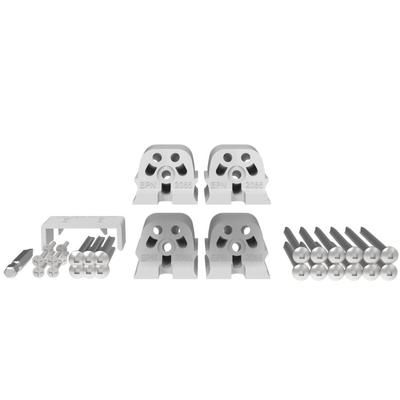
RDI Outdoor Lighting Accessories Transform 4 BracketsThe RDI Outdoor Lighting Accessories completes the Outdoor Lighting options with the necessary parts. Use the LED wiring to connect RDI Low voltage lights and lighted post caps. For help adding light to your LED lighting system use a 2-way or 5-way...26,19 $*Shipping: 0,00 $Secure redirect to the provider
-
Kids Wooden Dollhouse Aged 3-8 w/ 32PCS Furniture AccessoriesGift your kids an enchanting world with our doll house! Featuring 3 tiers and 7 rooms, our doll house playset turns any nook of your child's room into a whimsical haven of delight.162,99 $*Shipping: 0,00 $Secure redirect to the provider
-
Jla Home/Furniture & Decor Faye Ginkgo Leaves Wall Art Gold , GoldThe Faye Ginkgo Wall Art decorates with a delicate look of luxury. Made of metal, this wall sculpture, by Martha Stewart, features six ginkgo leaves with a gold foil finish. Measures 43 Wx2 Dx24 H. Metal wall art by Martha Stewart Features elegant...76,99 $*Shipping: 0,00 $Secure redirect to the provider
-
Lush Living Finds Popeye The Sailor Man Brass Home Decor, Desk Art Ornament For Office, Tea Table & Car Desktop Accessories Popeye The Sailor Man Brass Home Decor, Desk Art Ornament For Office, Tea Table & Car Desktop AccessoriesAdd Character to Your Space Bring the iconic Popeye The Sailor Man Figure Brass Home Decor to your home or office. This detailed ornament makes an excellent centerpiece for your tea table or office desk. Crafted from highquality brass, it adds a...29,97 $*Shipping: 0,00 $Secure redirect to the provider
-
What does inhomogeneous and homogeneous mean?
Inhomogeneous refers to something that is not uniform or consistent throughout, such as a mixture with uneven distribution of its components. For example, a soil with varying levels of nutrients can be considered inhomogeneous. On the other hand, homogeneous refers to something that is uniform or consistent throughout, such as a solution with evenly distributed components. For instance, a well-mixed sugar-water solution can be considered homogeneous. **
-
Is it a homogeneous or an inhomogeneous field?
The question is not specific enough to determine whether the field is homogeneous or inhomogeneous. In physics, a homogeneous field is one that has the same value at every point in space, while an inhomogeneous field varies in value from point to point. Without more information about the specific field in question, it is not possible to determine whether it is homogeneous or inhomogeneous. **
-
How do you solve an inhomogeneous differential equation?
To solve an inhomogeneous differential equation, one typically uses the method of undetermined coefficients or variation of parameters. In the method of undetermined coefficients, one assumes a particular form for the solution and then solves for the unknown coefficients. In the variation of parameters method, one assumes a particular form for the solution and then solves for the unknown parameters by substituting the solution back into the original differential equation. Both methods involve finding a particular solution to the inhomogeneous equation and then adding it to the general solution of the corresponding homogeneous equation. **
-
What are homogeneous and inhomogeneous media in physics?
Homogeneous media in physics are materials that have uniform properties throughout, such as density, refractive index, or conductivity. This means that any physical quantity measured at any point within the material will be the same. In contrast, inhomogeneous media have varying properties throughout, leading to spatial variations in physical quantities. Examples of inhomogeneous media include a mixture of different materials, or a material with a gradient in its properties. Understanding the behavior of light, sound, or other waves in homogeneous and inhomogeneous media is important in various fields of physics and engineering. **
Similar search terms for Inhomogeneous
-
Uplifted Finds Artisanal Masterpiece Home Collection Curated High End Gallery Textiles & Decor a 200 Cm 78.74 In"Elevate your living environment with our Artisanal Masterpiece Home Collection. This premium selection of curated textiles and decorative accents is the ultimate designer solution for creating a ""LuxuryArchive"" or ""ModernMuseum"" atmosphere in any..."853,97 $*Shipping: 0,00 $Secure redirect to the provider
-
How does an electron behave in an inhomogeneous field?
In an inhomogeneous field, an electron will experience a force that varies in direction and magnitude depending on its position within the field. This can cause the electron to accelerate, decelerate, or change direction as it moves through the field. The electron's trajectory will be influenced by the spatial variation of the field, leading to complex and non-uniform motion. Overall, the electron's behavior in an inhomogeneous field is characterized by its response to the changing forces acting on it as it moves through the field. **
-
How do you solve a second-order inhomogeneous differential equation?
To solve a second-order inhomogeneous differential equation, one can use the method of undetermined coefficients or variation of parameters. The method of undetermined coefficients involves finding a particular solution to the inhomogeneous equation by assuming a form for the solution and then solving for the coefficients. Variation of parameters involves finding a particular solution by assuming a solution of the homogeneous equation and then using the method of variation of parameters to find a particular solution. Once the particular solution is found, the general solution to the inhomogeneous equation can be obtained by adding the particular solution to the general solution of the corresponding homogeneous equation. **
-
What is the second-order difference equation for an inhomogeneous equation?
The second-order difference equation for an inhomogeneous equation is of the form \(y[n] - a_1y[n-1] - a_2y[n-2] = x[n]\), where \(y[n]\) represents the output sequence, \(x[n]\) represents the input sequence, and \(a_1\) and \(a_2\) are constants. This equation describes how the current output value \(y[n]\) is related to the previous two output values \(y[n-1]\) and \(y[n-2]\), as well as the current input value \(x[n]\). The inhomogeneous term \(x[n]\) represents any external influences or disturbances acting on the system. **
-
What is the difference between a homogeneous and an inhomogeneous linear function?
A homogeneous linear function is one in which the inputs are scaled by a constant factor, and the outputs are also scaled by the same constant factor. In other words, if you multiply the input by a constant, the output is also multiplied by the same constant. An inhomogeneous linear function, on the other hand, includes a constant term that is not affected by scaling of the input. This means that if you multiply the input by a constant, the output is scaled by the same constant, but there is also an additional constant term added to the output. **
* All prices are inclusive of VAT and, if applicable, plus shipping costs. The offer information is based on the details provided by the respective shop and is updated through automated processes. Real-time updates do not occur, so deviations can occur in individual cases. ** Note: Parts of this content were created by AI.